China continued to restrict global exports of rare earths in May 2026, with exports of upstream compounds/metals and shipments of certain products to the United States and Japan among the most impacted. Three key takeaways from Silverado’s latest dashboard are discussed below.
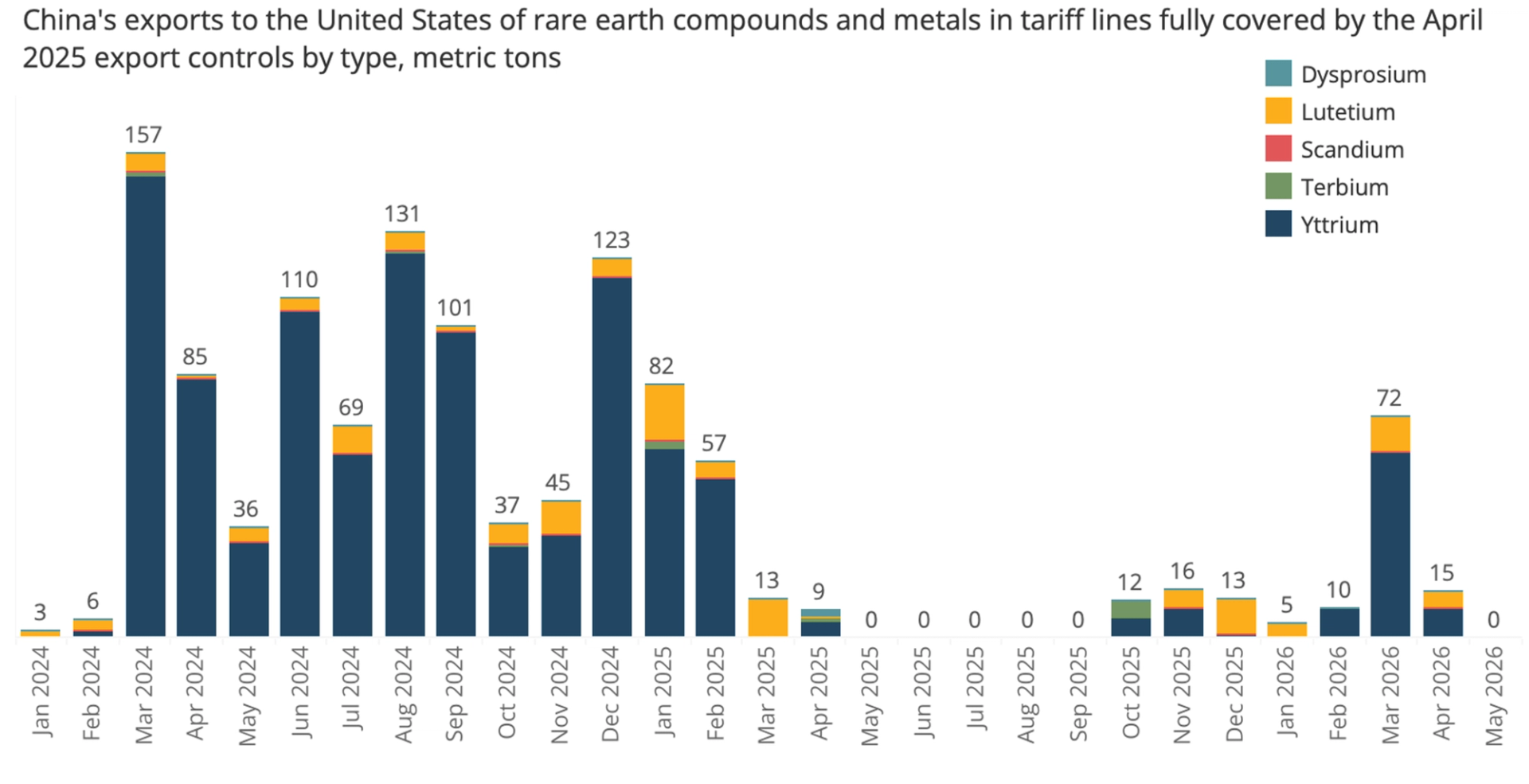
1. China’s shipments of export-controlled rare earth compounds and metals to the United States—which had briefly recovered in March and April—fell to zero in May.
China’s exports of rare earth compounds and metals to the United States have been very limited since China implemented its April 2025 export controls. U.S.-bound exports briefly recovered in March 2026, declined again in April, and fell to zero in May—the first time U.S.-bound exports of these products have fallen to zero since September 2025.
China’s shipments of export-controlled rare earth compounds and metals to the United States were historically concentrated in yttrium and lutetium. In March, Chinese exports of both products were strong. By May, both had fallen back to zero, indicating that the March rebound was not a return to increased exports but rather a short-lived resumption in trade flows that did not signal a broader easing of restrictions on U.S.-bound shipments.
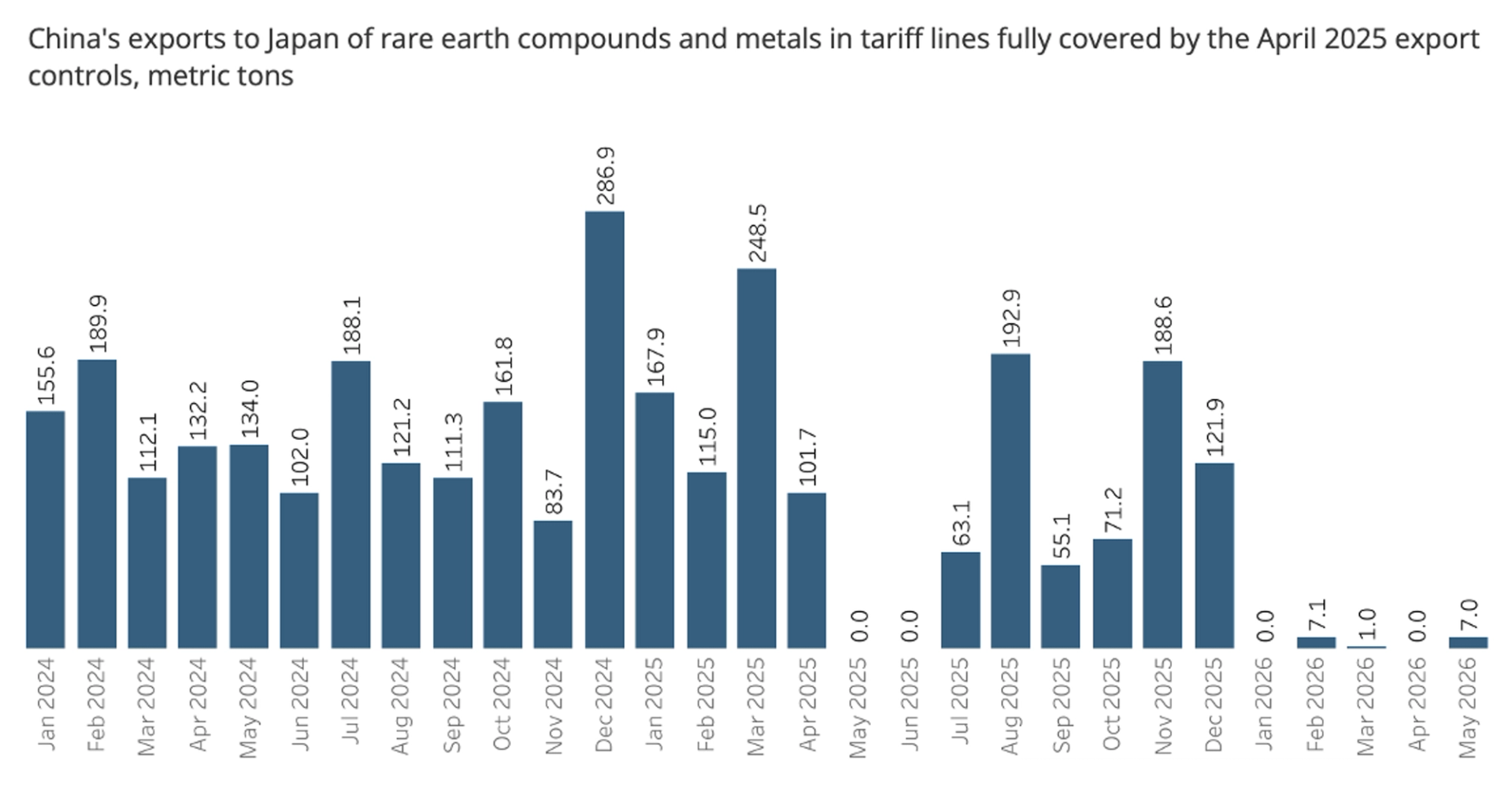
2. Japan continues to receive few rare earth compounds and metals due to new limits imposed by China in January 2026.
In May 2026, shipments of export-controlled rare earth compounds and metals to Japan remained minimal, continuing the pattern that followed China’s January controls. Exports of rare earth permanent magnets to Japan also declined in May, though it remains to be seen whether this is the start of a longer-term trend.
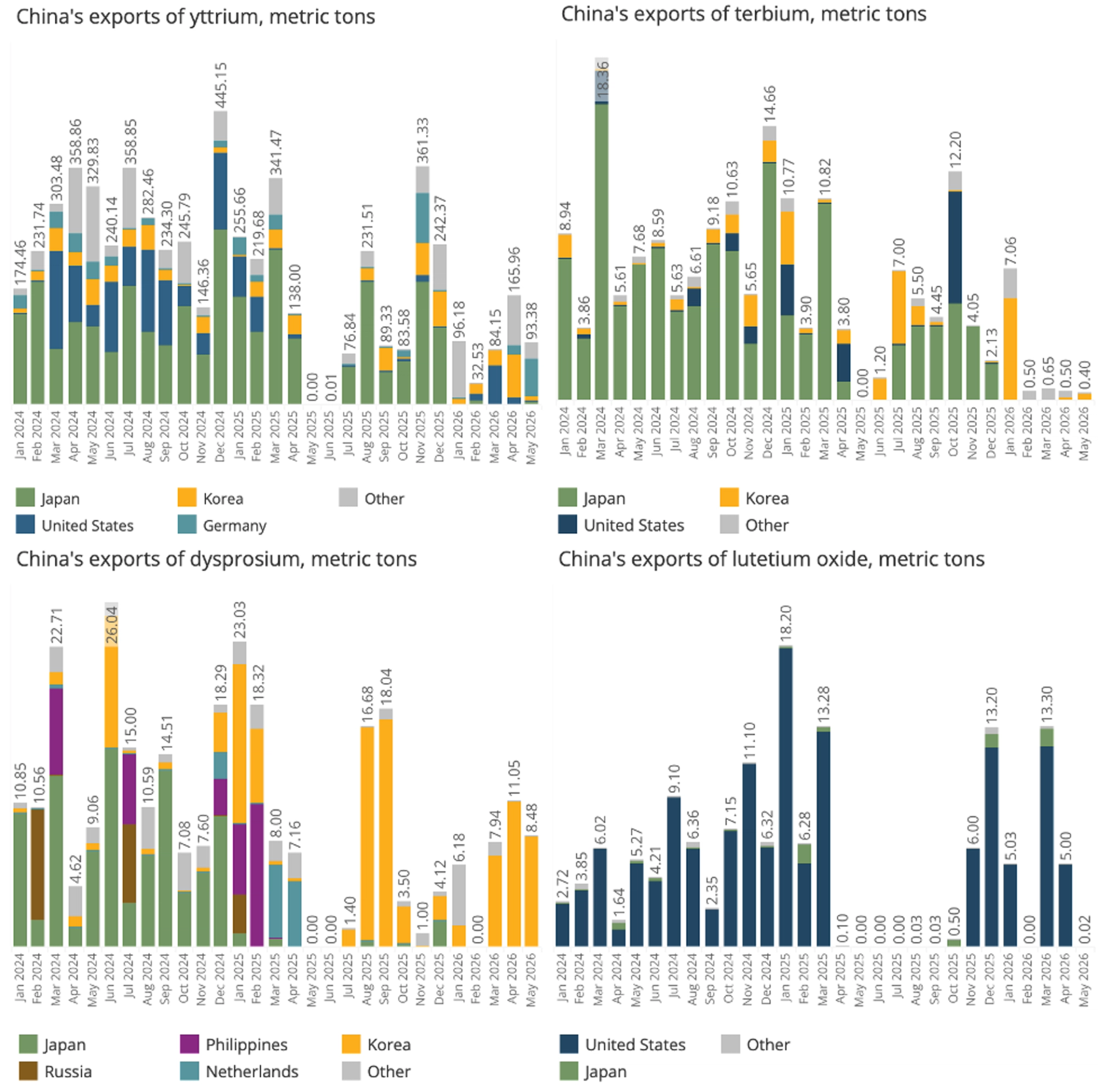
3. China’s global exports of yttrium, terbium, and lutetium oxide remained constrained in May. Dysprosium exports, however, were around historical levels.
China’s May exports of individual export-controlled rare earth elements show that restrictions continue to affect most of these products. Key product trends include:
Yttrium exports remained well below typical pre-export control levels in May, with exports to Japan, historically a major destination for Chinese yttrium exports, near zero.
Terbium exports were even more constrained, remaining less than 1 metric ton in May.
Lutetium oxide exports also weakened, falling to near zero after strong exports in five of the last six months. However, February exports were zero and then bounced back, so it remains to be seen if this is the start of a long-term trend.
Dysprosium exports were the main exception, remaining within the range of pre-export control levels in May, with most shipments going to South Korea.