Silverado Insights
Silverado regularly hosts video conversations, expert panels, and webinars featuring its research staff and subject-matter specialists. These programs explore emerging policy issues, unpack the findings behind Silverado’s publications, and provide context on key national and economic security trends. Each session offers clear, research-grounded insights for policymakers, practitioners, and the public.

China’s Global Exports of Rare Earths: May 2026 Update
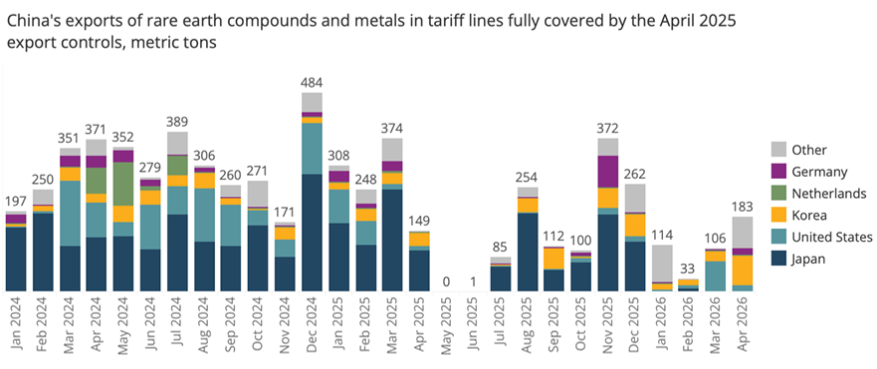
China continued to restrict global exports of rare earths in April 2026, with global exports of upstream compounds/metals and shipments of certain products to the United States and Japan being the most impacted.
China continued to restrict global exports of rare earths in April 2026, with global exports of upstream compounds/metals and shipments of certain products to the United States and Japan being the most impacted. Three key takeaways from Silverado’s latest dashboard, which is based on data in the month prior to the recent meetings between Presidents Trump and Xi, are discussed below.
1. China continued to restrict exports of rare earth compounds and metals
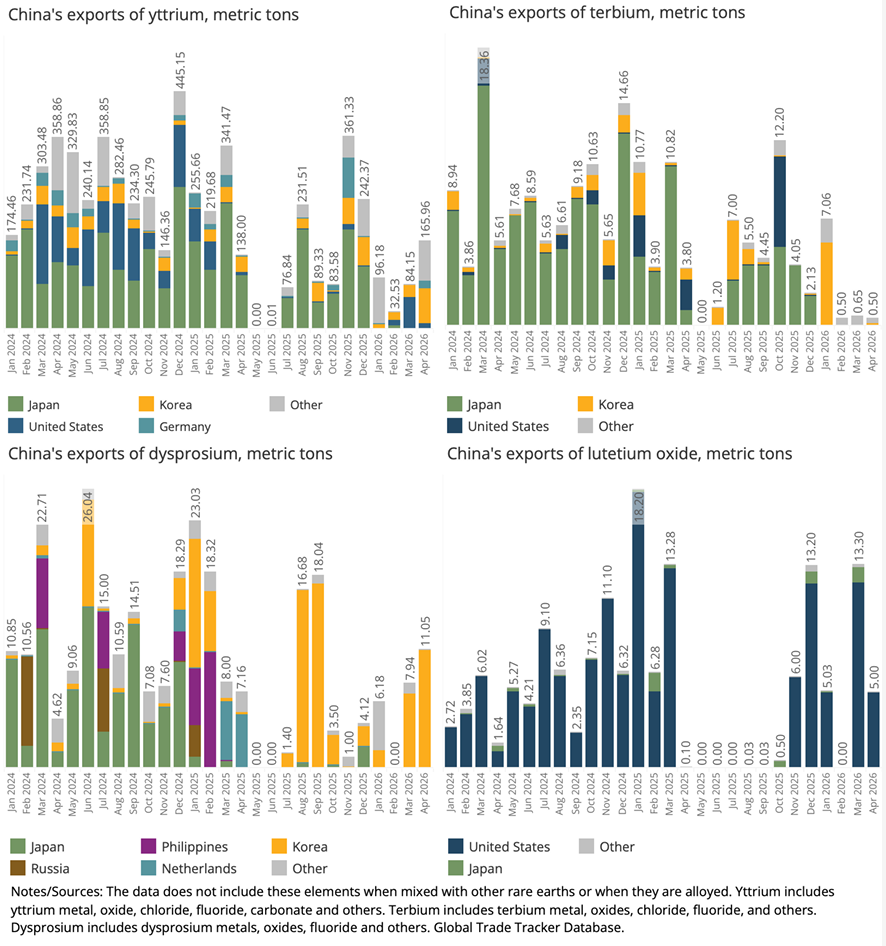
China’s exports of export-controlled rare earth compounds and metals remained below historical levels in April 2026. Examining some of the export-controlled minerals broken out in China’s export data, China’s exports of yttrium and terbium were below typical historical levels in April 2026, while exports of dysprosium and lutetium oxide were within the levels of typical historical norms. Yttrium exports represented the highest volume of the four rare earths, making the reduced level of yttrium exports a driving factor in the overall reduction of export-controlled rare earth exports and pushing export-controlled exports of rare earths to well below historical levels.
2. Exports to the United States are among the most impacted trade flows
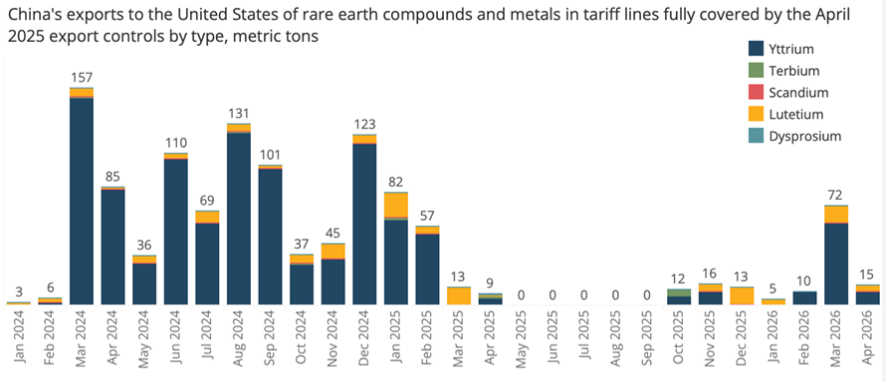
China’s exports of rare earth compounds and metals to the United States have been very limited since China implemented export controls. Exports briefly recovered in March 2026 but fell again in April. China’s exports of yttrium, critical in the production of turbines for aerospace and power generation applications, were low in April 2026. On the other hand, the United States received an amount of lutetium oxide, critical for U.S. medical device manufacturers, that was within the range of typical historical exports.
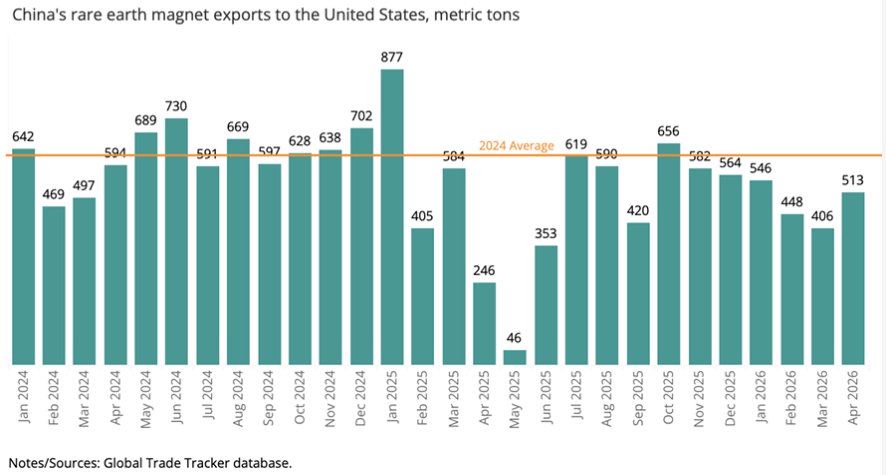
While China’s exports of rare earth magnets to the world have largely normalized (at least the level of exports, information on the composition is not available), China’s exports to the United States remain weak. China’s exports (not all of which are subject to export controls) to the United States declined steadily from October 2025 through March 2026 before increasing in April. However, April 2026 magnet exports to the United States remained below the 2024 average.
3. Japan has received few rare earth compounds and metals since China imposed new limits on exports to the country
China imposed restrictions on exports of dual-use goods to Japan in January 2026 and reportedly slowed or halted approvals of new export licenses . This led to a sharp drop in exports to Japan, which had been one of the few countries able to get access to these products from China after the implementation of the April 2025 export controls. Exports to Korea, on the other hand, reached record levels in April 2026. Vietnam and Austria were also significant export destinations for compounds and metals in April.


Related Material

Maureen Hinman Warns U.S. Risks Becoming a “System Taker” In Global AI Race
Jun 22, 2026

China’s Underestimated Semiconductor Silicon Wafer Industry
Jun 10, 2026

Opinion: The Mythos Storm: Why AI’s New "Superpower" is a Mirror, Not a Myth
Apr 15, 2026

China’s Global Exports of Rare Earth Elements and Rare Earth Permanent Magnets
Mar 23, 2026
China’s Export Controls on Bismuth: Assessing the Impact on Production and Trade
Mar 10, 2026

Inside China's New 15th Five-Year Plan
Mar 06, 2026